The Complete Guide to Book Binding Methods
Saddle stitch, perfect binding, case binding, spiral, Wire-O, Smyth sewn — learn how each book binding method works, what it costs, and which is right for your project.
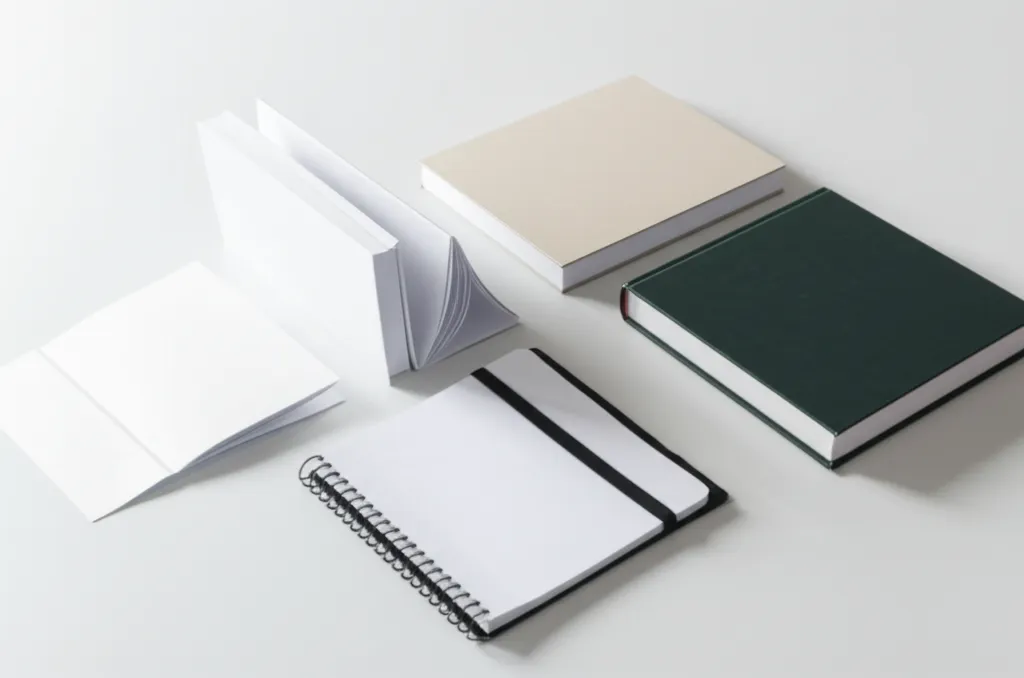
Choosing the right binding method is one of the most important decisions in any book or booklet project. It affects how your piece looks, feels, opens, lasts, and costs. Yet most people walk into a print shop with no idea what their options are.
The Short Answer
Saddle stitch is cheapest for thin booklets (8–64 pages). Perfect binding gives a professional paperback look for 48–600 pages. Case binding (hardcover) is the most durable and premium option. Spiral and Wire-O let books lay flat — ideal for manuals and planners. Smyth sewn is the gold standard for archival quality.
This guide covers the seven most common commercial binding methods, with honest advice on when to use each one.
Quick Comparison: All 7 Binding Methods at a Glance
| Binding Method | Page Range | Cost | Durability | Lays Flat? | Best For |
|---|---|---|---|---|---|
| Saddle Stitch | 8–64 | $ | Low–Medium | Yes | Booklets, brochures, programs |
| Perfect Binding | 48–600 | $$ | Medium | No | Catalogs, trade books, reports |
| Case Binding | 48–800 | $$$ | Very High | No | Coffee-table books, textbooks |
| Smyth Sewn | 64–800 | $$$$ | Very High | Mostly | Archival books, heirloom projects |
| Otabind (Layflat) | 40–300 | $$$ | High | Yes | Photo books, cookbooks |
| Spiral (Coil) | 16–300 | $$ | Medium | Yes | Workbooks, manuals, notebooks |
| Wire-O | 16–300 | $$–$$$ | Medium–High | Yes | Planners, presentations, calendars |
1. Saddle Stitch Binding
Saddle stitch is the simplest and most affordable binding method. Printed sheets are folded in half, nested together, and stapled along the spine (the "saddle"). It's the same method used for most magazines and event programs.
✓ Pros
- Lowest cost per unit
- Fast turnaround
- Opens and lays flat easily
- Short runs are economical
✗ Cons
- Max ~64 pages (16 sheets)
- No printable spine
- Pages can loosen over time
- Page count must be a multiple of 4
Ideal For
- Church bulletins & programs
- Event brochures
- Product catalogs (thin)
- Newsletters & zines
Pro tip: Saddle stitch page counts must be multiples of 4 (8, 12, 16, 20…). If your content doesn't divide evenly, plan for a blank page or add an ad/notes section.
2. Perfect Binding
Perfect binding is what you see on most paperback books and thick magazines. Individual pages (or folded signatures) are gathered together, the spine edge is roughened, and a strong adhesive attaches them to a wrap-around cover. The result is a clean, squared spine that can be printed with the book's title.
✓ Pros
- Professional paperback look
- Printable spine for shelf display
- Handles 48–600+ pages
- Cost-effective at moderate quantities
✗ Cons
- Doesn't lay flat when opened
- Spine can crack with heavy use
- Not ideal for thin booklets
- Pages can fall out over years
Ideal For
- Trade paperback books
- Annual reports
- Thick catalogs (50+ pages)
- Training manuals
Perfect binding is the most popular method for commercial book printing because it balances cost, appearance, and durability. Most runs of 250+ copies are economical with perfect binding.
3. Case Binding (Hardcover)
Case binding — also called edition binding — wraps the book block in rigid boards covered with cloth, paper, or leather. It's the classic hardcover book. The interior pages are typically glued or sewn to the case via endpapers.
✓ Pros
- Maximum durability and protection
- Premium, professional appearance
- Supports embossing, foil stamping, dust jackets
- Ideal for archival and library use
✗ Cons
- Highest cost per unit
- Longer production time (10–15 days)
- Heavier — higher shipping costs
- Minimum 48 pages typically required
Ideal For
- Coffee table books
- Corporate histories
- Children's picture books
- Commemorative & keepsake editions
Case-bound books signal quality. If you're creating a coffee table book, yearbook, or commemorative edition, hardcover is the standard expectation.
4. Smyth Sewn Binding
Smyth sewing is a premium binding technique where folded page signatures are stitched together with thread before being glued into a cover or case. It's the method used in high-end publishing and library-grade books. Smyth sewn books typically cost 30–50% more than standard perfect binding, but they last decades longer.
Why It Matters
A Smyth sewn book can be opened thousands of times without the spine cracking or pages falling out. It's the reason your grandmother's Bible still holds together. For projects meant to last a lifetime, there's no better binding method.
Smyth sewn binding requires folded signatures (groups of 16 or 32 pages), so your page count should work in those multiples. Minimum quantities are typically 150+ copies due to the specialized equipment involved.
5. Otabind (Layflat) Binding
Otabind is a clever variation where the book block is perfect-bound, but the cover is only attached at the outer edges — not at the spine. This allows the book to open completely flat without cracking the spine. It's increasingly popular for cookbooks and photo books where full-bleed spreads matter.
Pro tip: If your project has images or charts that span across two pages (full spreads), layflat binding ensures nothing gets lost in the gutter. It's worth the extra cost for photo books and technical diagrams.
6. Spiral (Coil) Binding
Spiral binding punches holes along the spine edge and threads a continuous plastic or metal coil through them. The book opens a full 360 degrees, making it perfect for documents that need to stay open on a desk or fold completely back.
Page Count
16–300 pages
No multiple-of-4 requirement — any page count works.
Turnaround
2–5 days
One of the fastest binding methods for short runs.
Spiral binding accounts for roughly 85% of all mechanical binding orders at commercial printers. It's the workhorse for training manuals, workbooks, recipe collections, and reference guides.
7. Wire-O Binding
Wire-O uses double-loop metal wire instead of a plastic coil. It offers a more polished, professional look than spiral binding and is a favorite for corporate presentations, planners, and calendars.
✓ Pros
- Sleek, professional metal finish
- Lays flat and folds back 360°
- More durable than spiral coil
- Available in multiple colors
✗ Cons
- More expensive than spiral
- Pages can't be added/removed
- Wire can bend if mishandled
- Not ideal for very thick books
Ideal For
- Corporate presentations
- Wall calendars
- Planners & journals
- Premium notebooks
How to Choose: A Step-by-Step Decision Framework
How many pages? Under 64 → saddle stitch. 48–600 → perfect binding or case binding. Need it to lay flat → spiral, Wire-O, or Otabind.
What's your budget? Tight → saddle stitch or spiral. Moderate → perfect binding. Premium → case binding or Smyth sewn.
How will it be used? Read once → perfect binding. Referenced repeatedly → spiral, Wire-O, or Smyth sewn. Displayed on a shelf → case binding with a printed spine.
Does it need to lay flat? Yes → spiral, Wire-O, Otabind, or Smyth sewn. No → perfect binding or case binding.
How long should it last? Months → saddle stitch or perfect binding. Years → case binding. Decades → Smyth sewn hardcover.
Binding Methods and Common Projects
| Project Type | Recommended Binding | Why |
|---|---|---|
| Event program | Saddle stitch | Low cost, fast turnaround, thin page count |
| Product catalog | Perfect binding | Professional look, printable spine, handles 50+ pages |
| Coffee table book | Case binding | Premium feel, durability, visual impact |
| Training manual | Spiral binding | Lays flat on desk, any page count, affordable |
| Corporate presentation | Wire-O | Polished metal look, lays flat, professional |
| Cookbook | Otabind (layflat) | Stays open hands-free, protects spreads |
| Family history book | Smyth sewn hardcover | Archival quality, lasts generations |
| Wall calendar | Wire-O (top-bound) | Hangs flat, pages flip cleanly |
Need Help Choosing?
The best way to decide is to see and feel samples. At First Global Graphics, we keep samples of every binding method in our Irwindale shop. Stop by, flip through them, and we'll help you match the right binding to your project's goals and budget.
Call us at (626) 960-4081 or request a quote online. We'll walk you through your options and give you an honest recommendation — no upselling, just decades of bookmaking experience.
Frequently Asked Questions
What is the cheapest book binding method?+
Saddle stitch binding is the most affordable option. It works for booklets up to about 64 pages and uses simple staples along the folded spine. It's ideal for programs, brochures, and thin catalogs where budget is the primary concern.
What binding method is best for books that need to lay flat?+
Spiral (coil) binding, Wire-O binding, and Otabind (layflat) binding all allow books to open and stay flat. Spiral and Wire-O can even fold back 360 degrees. Otabind is best for softcover books where you want a clean paperback look that still opens flat.
How many pages do I need for perfect binding?+
Perfect binding typically requires a minimum of 48 pages (including covers) to create enough spine width for the adhesive to hold properly. Some printers can go as low as 40 pages. There's no strict maximum, but most perfect-bound books stay under 600 pages.
What is the difference between case binding and perfect binding?+
Perfect binding uses a flexible cardstock cover glued to the spine, creating a paperback book. Case binding wraps the book block in rigid boards (hardcover), offering significantly more durability, protection, and a premium appearance. Case binding costs more and takes longer to produce.
Is Smyth sewn binding worth the extra cost?+
Smyth sewn binding costs 30–50% more than standard perfect binding, but it's significantly more durable. The thread-sewn signatures resist page loss and spine cracking far better than glue alone. For books meant to last decades — reference works, family histories, premium editions — it's absolutely worth it.
What is the difference between spiral binding and Wire-O?+
Spiral binding uses a continuous plastic or metal coil that threads through punched holes. Wire-O uses double-loop metal wire that is crimped shut. Wire-O looks more professional and is slightly more durable, but costs more. Spiral is more common for everyday manuals and workbooks.
Ready to start your print project?
Get a free quote or call us at (626) 960-4081