How Inkjet Is Catching Up to Offset: What LA Print Buyers Need to Know in 2026
Inkjet printing now rivals offset for runs up to 12,000 copies. Learn how this shift affects cost, quality, and turnaround for Los Angeles print buyers in 2026.
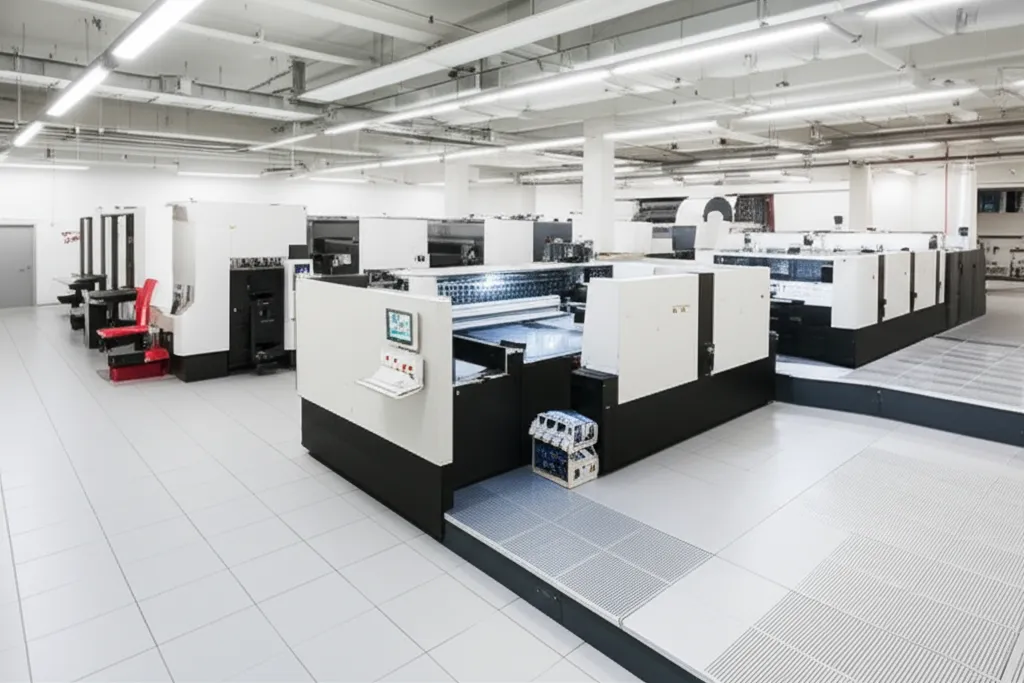
For decades, the decision was simple: offset for long runs, digital for short runs. But in 2026, that line is blurring fast. Production inkjet technology has improved so dramatically that it now competes with offset on quality, speed, and cost for runs that would have been offset-only territory just a few years ago.
The Short Answer
Inkjet printing is now cost-competitive with offset for runs up to 12,000 impressions, up from roughly 5,000 just a few years ago. For LA print buyers, this means more flexibility, faster turnaround, and new options for mid-range jobs. But offset still wins for very large runs and color-critical premium work.
Here's what's changed, why it matters for your next print project, and how to decide which technology fits your needs.
The Crossover Point Has Shifted Dramatically
The "crossover point" is the quantity where offset becomes cheaper per unit than digital. For years, that number sat around 500 to 1,000 copies. Then digital improved and pushed it to 3,000 to 5,000.
In 2026, industry reports from Keypoint Intelligence and Smithers show the crossover point for production inkjet vs. offset has moved to approximately 12,000 impressions. That's a massive shift. Jobs that print shops would have automatically routed to offset presses are now viable (and sometimes more profitable) on inkjet.
What's driving this? Three factors:
- Faster inkjet speeds: Modern production inkjet presses from Canon, Ricoh, and HP now run at 150+ pages per minute in full color, approaching offset throughput.
- Lower ink costs: Aqueous inkjet ink costs have dropped 30 to 40% over the last five years as manufacturers scaled production.
- Rising offset labor costs: Offset press operators in the LA area now command $40 to $50+ per hour. Inkjet presses require less skilled labor and less hands-on time.
Quality: Can You Tell the Difference?
This is the question every print buyer asks. Five years ago, the answer was a clear "yes." Offset had noticeably sharper text, smoother gradients, and more consistent color across a run.
In 2026, the gap has narrowed to the point where most print buyers cannot distinguish inkjet from offset in a blind test. Here's where each technology stands:
| Quality Factor | Offset (2026) | Production Inkjet (2026) |
|---|---|---|
| Resolution | 2,400+ DPI | 1,200 x 1,200 DPI (effective) |
| Color gamut | Wide (Pantone matching) | Approaching offset (90%+ Pantone coverage) |
| Consistency across run | Excellent (once dialed in) | Excellent (no plate wear) |
| Fine text sharpness | Superior at very small sizes | Very good (6pt+ indistinguishable) |
| Substrate range | Very wide | Expanding rapidly |
| Spot colors / metallics | Yes (additional plates) | Limited (some presses support white ink) |
The takeaway: for standard CMYK commercial work like brochures, catalogs, direct mail, and books, inkjet quality is now indistinguishable from offset at normal viewing distance. Offset still has the edge for Pantone spot colors, metallic inks, and ultra-fine detail work like high-end packaging or art reproduction.
Speed and Turnaround: Where Inkjet Wins
One of inkjet's biggest advantages isn't print quality. It's turnaround time. Here's why:
- No plate production: Offset requires making metal plates for each color, which adds hours (sometimes a full day) to production. Inkjet goes straight from file to press.
- Faster makeready: Offset presses need calibration, ink balancing, and waste sheets before the run starts. Inkjet makeready is measured in minutes, not hours.
- Less waste: Offset typically wastes 200 to 500 sheets during setup. Inkjet wastes almost nothing.
For LA businesses that need materials fast, such as event programs, product launches, or last-minute marketing campaigns, inkjet's speed advantage can save days off your timeline.
Cost Breakdown: When Each Makes Sense in 2026
Let's look at real-world scenarios that LA print buyers commonly face:
| Scenario | Better Option | Why |
|---|---|---|
| 500 brochures | Inkjet | No setup cost, same quality, faster delivery |
| 5,000 catalogs | Inkjet (or either) | Now in the overlap zone, price is comparable |
| 10,000 postcards | Compare quotes | Near the crossover, depends on specs and timeline |
| 50,000 flyers | Offset | Clear cost advantage at this volume |
| Personalized direct mail | Inkjet | Variable data printing is only possible digitally |
| Premium annual report | Offset | Pantone colors, special finishes, premium feel |
The key insight for 2026: the "automatic offset" zone has shrunk dramatically. Jobs between 1,000 and 10,000 copies deserve a quote from both technologies. You might be surprised which comes out ahead.
What This Means for LA and SoCal Print Buyers
Southern California has one of the densest concentrations of commercial printers in the country. The LA print market is competitive, and that competition is accelerating the inkjet transition. Here's what local buyers should know:
- More print shops offer inkjet now: Even traditional offset houses in the San Gabriel Valley, Downtown LA, and the Inland Empire are adding production inkjet presses to stay competitive.
- Faster local turnaround: With inkjet's quick makeready, LA printers can offer same-week (sometimes same-day) turnaround on jobs that used to take 7 to 10 business days.
- Better pricing on mid-range runs: The 1,000 to 10,000 copy range is where LA print buyers will see the most savings, because printers now have two technologies competing for those jobs.
- Variable data is booming: LA's diverse, multilingual market makes personalized printing (different languages, names, offers per piece) increasingly valuable. Only inkjet/digital can do this.
At First Global Graphics in Irwindale, we run both offset and digital presses under one roof. That means we can quote your job on both technologies and recommend whichever gives you the best combination of quality, speed, and price, with no bias toward one press over the other.
When Offset Still Wins (and Will for Years)
Inkjet is catching up fast, but offset isn't going anywhere. Here's where offset remains the clear choice:
- Very long runs (25,000+): At high volumes, offset's per-unit cost is still unbeatable.
- Pantone and spot color work: Brand-critical color matching (think Coca-Cola red or Tiffany blue) still requires offset's ability to mix and run dedicated ink colors.
- Specialty substrates: Offset handles a wider range of paper stocks, including textured, extra-thick, and specialty materials.
- Premium finishes: Foil stamping, embossing, and spot UV are typically paired with offset printing for the best results.
- Fine art and photography reproduction: When every subtle tone matters, offset's higher native resolution still provides an edge.
The smart approach in 2026 isn't "offset vs. inkjet." It's knowing when each technology serves your project best, and working with a printer that offers both.
How to Get the Best Value on Your Next Print Job
Whether you're printing 500 flyers for a Pasadena restaurant or 20,000 catalogs for a trade show at the LA Convention Center, here are practical tips:
- Always ask for quotes on both technologies. A good print shop will recommend the best fit, not just the press they happen to own.
- Consider your timeline. If you need materials in 3 days, inkjet almost always wins. If you have 2 weeks, offset might save money on larger runs.
- Think about versioning. Running the same brochure in English, Chinese, and Spanish? Inkjet handles multiple versions without extra plate costs.
- Request samples. Ask your printer for inkjet and offset samples on similar stock. Judge with your own eyes.
- Factor in total cost. Offset's lower per-unit price can be offset (no pun intended) by longer turnaround, more waste, and higher setup fees.
Get a Quote from First Global Graphics
We've been printing for LA businesses for over 30 years from our facility in Irwindale, CA. We run both offset and digital/inkjet presses, so we can give you an honest recommendation based on your project, not our equipment preferences.
Call us at (626) 960-4081 or request a quote online. We'll walk you through the options and help you get the best quality for your budget.
First Global Graphics is located at 12921 Ramona Blvd, Ste I, Irwindale, CA 91706. We serve businesses throughout Los Angeles, the San Gabriel Valley, and all of Southern California.
Frequently Asked Questions
Is inkjet printing as good as offset in 2026?+
For standard CMYK commercial work like brochures, catalogs, and direct mail, most print buyers cannot distinguish inkjet from offset quality. Offset still has an edge for Pantone spot colors, metallic inks, and ultra-fine detail work.
At what quantity should I choose offset over inkjet?+
In 2026, the crossover point is approximately 12,000 impressions. Below that, inkjet is often comparable or cheaper. Above 25,000 copies, offset is almost always more cost-effective. Between 10,000 and 25,000, get quotes on both.
Why is inkjet getting cheaper?+
Three main factors: faster press speeds (150+ pages per minute), a 30 to 40% drop in aqueous ink costs over five years, and rising offset labor costs ($40 to $50+ per hour for press operators in the LA area).
Can inkjet handle the same paper stocks as offset?+
Inkjet substrate compatibility has expanded rapidly but still lags offset. Most coated and uncoated stocks work well on inkjet. Specialty textures, extra-thick boards, and some synthetic materials may still require offset.
Is inkjet faster than offset for turnaround?+
Yes. Inkjet requires no plate production and minimal makeready time. Jobs that take 5 to 7 business days on offset can often be completed in 2 to 3 days on inkjet, sometimes same-day for rush orders.
Does First Global Graphics offer both inkjet and offset?+
Yes. First Global Graphics in Irwindale runs both offset and digital presses under one roof, allowing us to quote your job on both technologies and recommend the best fit for your project. Call (626) 960-4081 for a quote.
What types of print jobs still require offset in 2026?+
Very long runs (25,000+ copies), Pantone spot color work, metallic inks, specialty substrates, premium finishes like foil stamping and embossing, and fine art or photography reproduction where every subtle tone matters.
Ready to start your print project?
Get a free quote or call us at (626) 960-4081