Offset vs Digital Printing: Which Is Right for Your Project?
Choosing between offset and digital printing? This guide breaks down cost, quality, turnaround, and ideal use cases so you can pick the right method for your next print project.
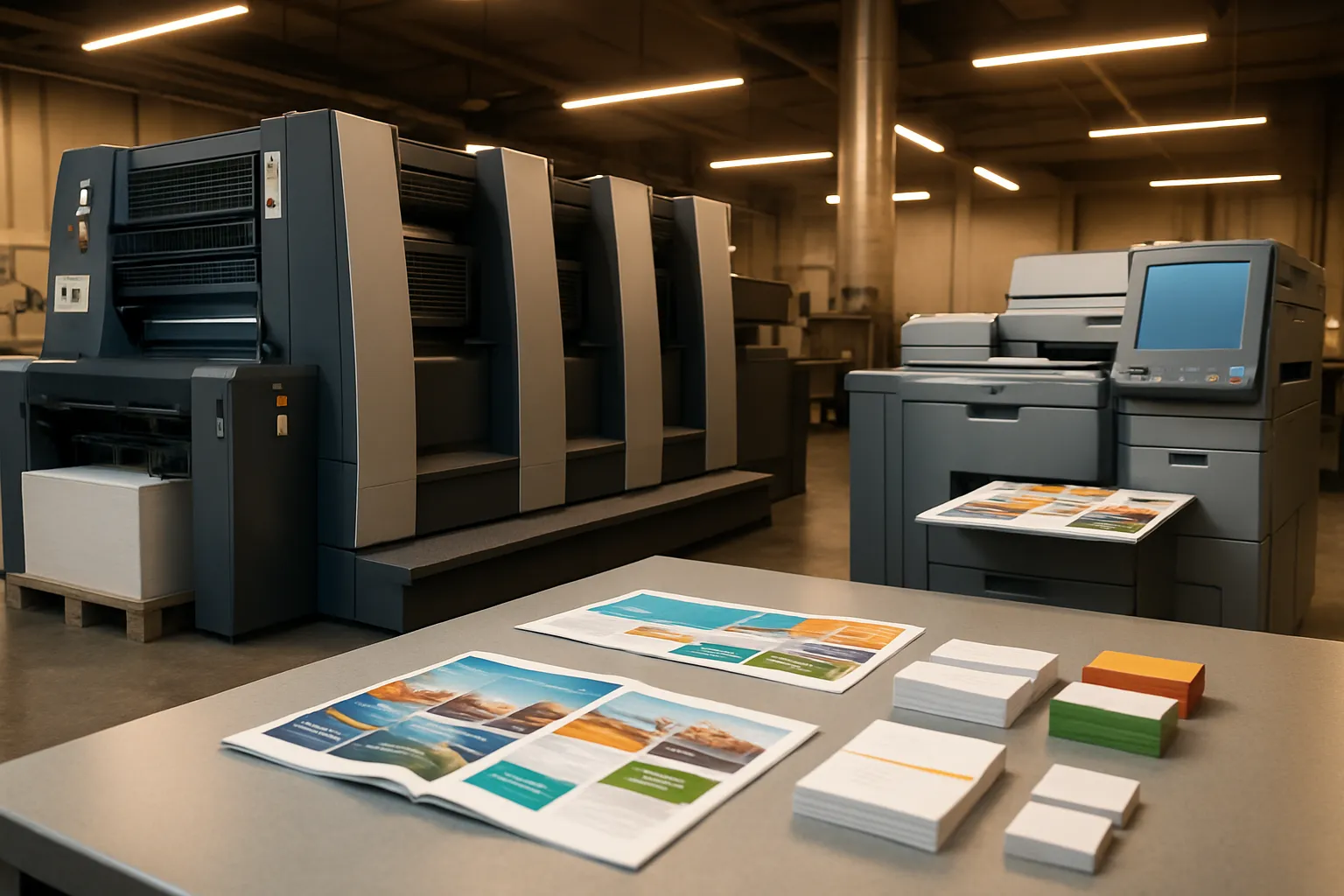
If you've ever requested a quote from a print shop, you've probably been asked: "Do you want offset or digital?" For many business owners, marketers, and self-publishers, the distinction isn't immediately clear — and making the wrong choice can cost you time and money.
The Short Answer
Offset printing is best for large runs (500+ copies) where color precision and low per-unit cost matter most. Digital printing is best for short runs, fast turnaround, and projects that need variable data (like personalized mailers).
Now let's dig into the details so you can make the right call for your specific project.
How Offset Printing Works
Offset printing — sometimes called lithographic printing — uses custom metal plates to transfer your design onto paper. Here's the simplified process:
- Prepress: Your design is separated into individual color channels (typically CMYK — cyan, magenta, yellow, and black). A metal plate is created for each color.
- Plate mounting: Each plate is mounted on a rotating cylinder on the press.
- Ink transfer: The plate cylinder rolls against a rubber "blanket" cylinder, which then transfers the ink to the paper. This indirect transfer is why it's called "offset."
- Drying and finishing: The printed sheets dry (via heat or air) and move to finishing — cutting, folding, binding, or coating.
Because each plate costs money to produce, offset has a meaningful setup cost. But once the press is running, additional copies are extremely cheap. That's what makes offset printing economical at scale.
How Digital Printing Works
Digital printing skips the plate-making step entirely. Your file goes directly from computer to press — typically a high-end laser or inkjet system. The two most common digital printing technologies are:
- Toner-based (electrophotographic): Uses electrically charged powder fused to paper with heat. Xerox iGen and HP Indigo are popular examples.
- Inkjet: Sprays tiny droplets of liquid ink onto the substrate. Increasingly used for large-format and high-speed production.
Because there's no plate setup, the cost of printing one copy vs. ten copies is nearly the same. This makes digital printing ideal for short runs, prototypes, and on-demand printing.
Cost Comparison: Where the Lines Cross
The most common question we hear is: "Which is cheaper?" The answer depends entirely on quantity.
| Factor | Offset | Digital |
|---|---|---|
| Setup cost | $200–$1,000+ (plates) | $0–$50 |
| Per-unit cost (large run) | Very low | Moderate |
| Per-unit cost (short run) | Very high | Low |
| Break-even point | Typically 500–1,000 copies | |
For a run of 5,000 brochures, offset will almost always be cheaper per piece. For 200 business cards with a quick turnaround, digital is the clear winner.
Pro tip: If you're unsure, ask your print shop for quotes on both methods. A good shop (like ours) will recommend the option that genuinely saves you money.
Print Quality: Can You Tell the Difference?
Both methods produce professional results, but there are nuances:
- Color accuracy: Offset printing supports Pantone (PMS) spot colors, which means you can match a brand color exactly — down to metallics and fluorescents. Digital printing uses CMYK process color, which simulates Pantone colors but can't match every shade precisely.
- Consistency: Offset delivers extremely consistent color across a run of thousands. Digital can exhibit slight variation between sheets, though modern presses have minimized this.
- Fine detail: Offset typically achieves higher line screens (up to 300 lpi), making it better for fine art reproduction, intricate patterns, and high-end photography books.
- Solid coverage: Offset handles large areas of solid color more smoothly. Digital can sometimes show slight banding or mottling on heavy coverage.
For most business materials — brochures, flyers, business cards, postcards — both methods produce excellent results that your customers won't distinguish.
Turnaround Time
This is where digital printing has a major advantage:
Digital
1–3 days
No plates to make, no press setup to dial in.
Offset
5–10 days
Plate production, make-ready, drying, and finishing.
If you need materials for a trade show next week, digital is your friend. If you're planning a quarterly catalog with a comfortable timeline, offset may save you significant money.
Paper and Substrate Options
Offset printing works on virtually any paper stock — textured, uncoated, specialty, extra-thick, even some plastics and foils. Digital printing has improved dramatically but still has limitations with certain textured stocks and very thick substrates.
If your project calls for a specialty paper like cotton letterhead, embossed stock, or extra-heavy cover board, check with your printer. Offset will usually give you more options.
Variable Data and Personalization
Need to print 1,000 postcards where each one has a different name, address, or unique QR code? That's variable data printing, and it's exclusively a digital capability. Offset plates are fixed — every copy is identical.
Variable data is powerful for:
- Direct mail campaigns with personalized greetings
- Event badges and tickets with unique barcodes
- Serialized packaging or certificates
- A/B testing different designs in the same print run
Environmental Considerations
Both methods have improved their environmental footprint. Digital printing generates less waste because there are no plates to dispose of and no lengthy make-ready sheets. Offset printing, however, uses less energy per impression on long runs and supports soy-based and vegetable inks more broadly.
If sustainability is a priority, talk to your printer about paper sourcing (FSC-certified stocks), ink types, and recycling programs. At First Global Graphics, we're happy to discuss eco-friendly options for any project.
When to Choose Offset Printing
- ✓You need 500+ copies (the more you print, the more you save)
- ✓Your brand requires exact Pantone color matching
- ✓You're printing on specialty paper stocks
- ✓The project demands the highest possible image quality (art books, premium catalogs)
- ✓You have adequate lead time (7+ business days)
When to Choose Digital Printing
- ✓You need fewer than 500 copies
- ✓You need it fast (same-day to 3 business days)
- ✓Your project includes variable data or personalization
- ✓You're prototyping or testing a design before a larger run
- ✓Budget is tight and you want to avoid setup fees
Can You Combine Both Methods?
Absolutely — and it's more common than you'd think. A typical hybrid approach:
- Print the base design on offset for consistent color and low per-unit cost
- Overprint variable elements (names, addresses, unique codes) digitally
This gives you the best of both worlds: offset quality and economy at scale, plus digital flexibility for personalization. We handle hybrid jobs regularly at First Global Graphics.
Making Your Decision
Here's a simple decision framework:
How many copies? Under 500 → digital. Over 1,000 → offset. Between 500–1,000 → get quotes for both.
How fast? Under 5 days → digital. 7+ days → either method works.
Pantone colors required? Yes → offset. No → either works.
Variable data? Yes → digital (or hybrid).
Specialty paper? Check with your printer — offset usually offers more options.
Still unsure? Call us at (626) 960-4081 or request a quote. We'll review your project specs and recommend the most cost-effective approach — no upselling, just honest advice from a team that's been doing this for years.
Frequently Asked Questions
What is the main difference between offset and digital printing?+
Offset printing uses custom metal plates to transfer ink, making it cost-effective for large runs (500+ copies). Digital printing sends files directly to press with no plates, making it ideal for short runs, fast turnaround, and variable data projects.
Which printing method is cheaper?+
It depends on quantity. For runs over 500–1,000 copies, offset is cheaper per unit because setup costs are spread across many copies. For runs under 500, digital is more economical because there are no plate or setup fees.
How long does offset printing take vs digital?+
Digital printing typically takes same-day to 3 business days. Offset printing takes 5–10 business days due to plate production, press setup, and drying time. Rush options may be available for both.
Can digital printing match Pantone colors?+
Digital printing uses CMYK process color, which can simulate many Pantone shades but isn't an exact match for every color. If precise Pantone (PMS) matching is critical — especially for metallics or fluorescents — offset printing is recommended.
What is variable data printing?+
Variable data printing lets you customize each printed piece with unique information — names, addresses, QR codes, or images — within the same print run. This is a digital-only capability. Offset plates produce identical copies.
Can I combine offset and digital printing in one project?+
Yes. A common hybrid approach is to print the base design using offset for quality and economy, then overprint variable elements (like personalized names or unique codes) digitally. Many print shops, including First Global Graphics, handle hybrid jobs regularly.
Ready to start your print project?
Get a free quote or call us at (626) 960-4081