Paper Weight Guide: What 60lb, 80lb, 100lb Actually Means for Your Print
Confused by paper weights like 60lb text vs 80lb cover? This guide explains the US paper weight system, compares common stocks, and helps you pick the right paper for business cards, brochures, booklets, and more.
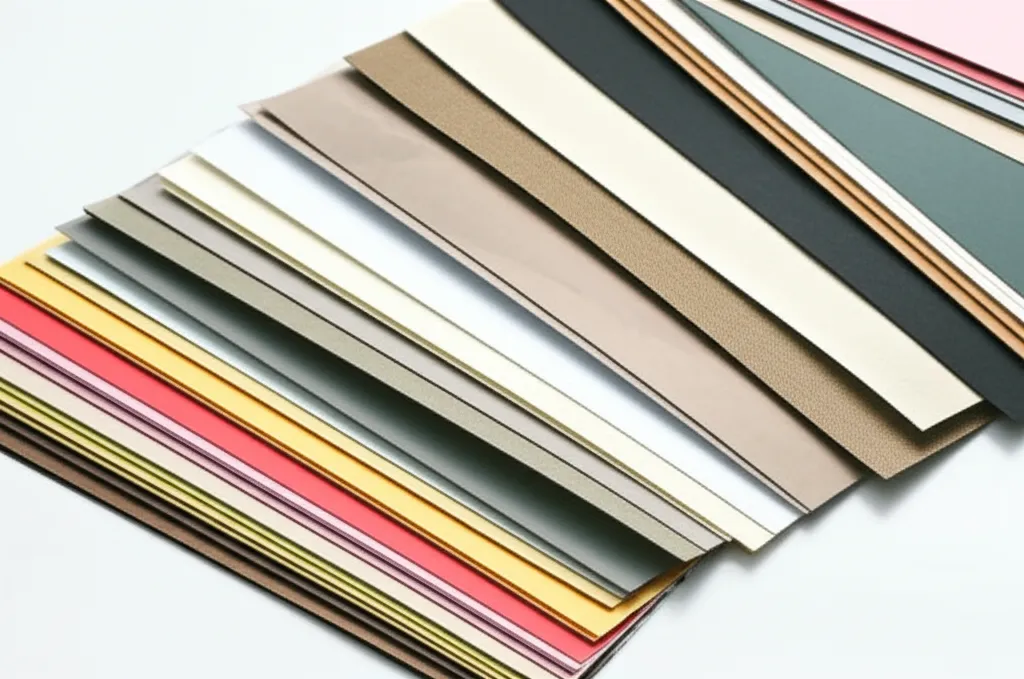
You're getting a quote from a printer and they ask: "Do you want 80lb gloss text or 100lb uncoated cover?" If that sounds like a foreign language, you're not alone. The US paper weight system is genuinely confusing — and picking the wrong stock can make your print job feel flimsy, cost more than it should, or jam in the press.
The Short Answer
Paper weight in the US is measured in pounds (lb), but the number only makes sense within its category — text or cover. A sheet of 80lb text is much thinner than 80lb cover. For international comparison, use GSM (grams per square meter), which is universal and unambiguous.
Let's break down how paper weight actually works, what the numbers mean, and which stock to pick for your next print project.
Why Paper Weight Is Confusing in the US
In the US, paper weight is determined by weighing 500 sheets (a ream) of paper at its base size. The problem? Different paper categories have different base sizes:
- Bond paper base size: 17″ × 22″
- Text paper base size: 25″ × 38″
- Cover paper base size: 20″ × 26″
- Index paper base size: 25.5″ × 30.5″
Because the base sizes differ, the same pound number means completely different thicknesses across categories. This is why 80lb text feels like a magazine page, while 80lb cover feels like a thick business card. They weigh the same per 500 sheets — but the sheets are different sizes.
This is also why the international GSM system (grams per square meter) is so much clearer. It measures the weight of one square meter of paper, regardless of category. No base-size trickery.
Text Weight vs Cover Weight: The Two Categories That Matter
For most commercial printing, you only need to know two categories:
Text Weight
Thinner, flexible sheets. Used for book pages, brochure interiors, flyers, letterhead, and inserts. Ranges from about 50lb text (thin, like copy paper) to 100lb text (thick, like a premium magazine page).
Cover Weight
Thicker, rigid stock. Used for business cards, postcards, book covers, folder pockets, and packaging. Ranges from about 65lb cover (thin card stock) to 130lb cover (very thick and stiff).
Key rule: Always specify "text" or "cover" after the number. Saying "I want 80lb paper" is ambiguous. Saying "80lb gloss text" is precise.
Paper Weight Comparison Chart
Here's a side-by-side reference of common paper weights, their GSM equivalent, and typical uses:
| US Weight | GSM (approx.) | Feels Like | Common Uses |
|---|---|---|---|
| 20lb bond | 75 gsm | Standard copy paper | Office printing, internal documents |
| 50lb text | 75 gsm | Thin, like a paperback page | Book interiors, newspaper inserts |
| 60lb text | 90 gsm | Slightly nicer than copy paper | Newsletters, multi-page booklet interiors |
| 70lb text | 105 gsm | Standard brochure interior | Brochures, catalog pages, flyers |
| 80lb text | 120 gsm | Quality magazine page | Premium brochures, annual reports |
| 100lb text | 150 gsm | Thick, almost rigid | High-end flyers, presentation inserts |
| 65lb cover | 175 gsm | Thin card stock | Report covers, light postcards, dividers |
| 80lb cover | 215 gsm | Standard postcard | Postcards, booklet covers, folders |
| 100lb cover | 270 gsm | Premium business card | Business cards, thick postcards, invitations |
| 110lb cover | 300 gsm | Very thick, rigid | Premium business cards, hang tags |
| 130lb cover | 350 gsm | Heavy board | Luxury packaging, rigid cards, point-of-purchase displays |
Pro tip: If you're comparing quotes between US and international printers, always convert to GSM. A US printer quoting "80lb cover" and a European printer quoting "215 gsm" are talking about the same paper.
Coated vs Uncoated: The Other Half of the Decision
Paper weight tells you how thick the sheet is. Coating tells you how the surface feels and how ink behaves on it. You'll almost always need to specify both.
| Coating | Surface Feel | Ink Behavior | Best For |
|---|---|---|---|
| Gloss | Shiny, reflective | Colors pop, sharp images | Photo-heavy brochures, product catalogs |
| Matte | Smooth, non-reflective | Softer colors, easy to read | Menus, reports, text-heavy pieces |
| Silk / Satin | Between gloss and matte | Good color with less glare | Business cards, lookbooks, invitations |
| Uncoated | Textured, natural | Ink absorbs more, muted tones | Letterhead, envelopes, organic/luxury brands |
Writing on it? Choose uncoated or matte — ink pens and pencils don't grip well on gloss-coated surfaces. This matters for reply cards, feedback forms, and any piece where the recipient needs to write something.
Which Paper Weight for Your Project
Here's what we recommend for the most common commercial print jobs:
Business Cards
100lb cover is the industry standard. It feels substantial and professional. Want to stand out? Go to 110lb or 130lb cover — the extra thickness makes a noticeable impression. Some premium cards use 16pt or 18pt board (measured in thousandths of an inch rather than pounds).
Brochures (Tri-Fold)
80lb gloss text is the most popular choice — folds cleanly, holds color well, and feels professional without being too stiff. For a more premium feel, step up to 100lb text. Avoid cover-weight stock for tri-folds unless specifically designed for a stiffer fold (it can crack along the fold line).
Postcards and Direct Mail
80lb to 100lb cover. USPS requirements for mailing at postcard rates specify a minimum thickness (0.007″). Most 80lb cover stocks meet this easily. If you want the piece to feel sturdy in a mailbox full of flimsy junk mail, go with 100lb cover.
Booklets and Catalogs
Use two different weights: a heavier stock for the cover (80lb cover or 100lb cover) and a lighter stock for the interior pages (70lb or 80lb text). This creates a natural contrast that feels professional and keeps costs reasonable for page-heavy projects.
Flyers
80lb gloss text for a polished look; 60lb text if budget matters more than perceived quality (like mass handouts at a trade show). For a premium single-sheet flyer that needs to feel impressive, 100lb text.
Letterhead and Stationery
24lb bond or 70lb text uncoated. It should feel nicer than copy paper but still run through a laser or inkjet printer without jamming. Uncoated stock is essential here — you need to write on it.
Point (pt) Thickness vs Pound Weight
You may also see paper measured in points (pt), which measures actual thickness in thousandths of an inch using a caliper. This is the most direct measurement — no category confusion, no base-size tricks.
- 10pt ≈ 80lb cover — standard postcards
- 12pt ≈ 100lb cover — business cards, thick postcards
- 14pt ≈ 100–110lb cover — premium business cards
- 16pt ≈ 120lb cover — ultra-premium cards, rigid feel
- 18pt ≈ 130lb cover — luxury cards, packaging
Point measurements are most common for cover stocks and business cards. If a printer quotes you in points, you can compare directly without worrying about text-vs-cover confusion.
3 Mistakes That Make Your Print Job Look Cheap
❌ Using text-weight paper for business cards
A business card on 80lb text will feel like a flimsy flyer. Cards need cover-weight stock — minimum 80lb cover, ideally 100lb+. First impressions matter, and the weight of your card sends a message before anyone reads it.
❌ Going too heavy on booklet interiors
A 48-page catalog printed on 100lb text will be bulky, expensive, and won't fold well. Interior pages should be 60lb to 80lb text for saddle-stitched booklets. Save the heavier stock for the cover.
❌ Choosing gloss when people need to write on the piece
Feedback cards, RSVP postcards, and order forms on gloss stock are a nightmare — ink smears and pencils slip. Use matte or uncoated for any piece that requires handwriting.
Not Sure Which Paper to Choose? We'll Send You Samples
At First Global Graphics in Irwindale, CA, we keep a wide range of stocks in-house and can send you physical samples so you can see and feel the difference before committing. Nothing beats holding two paper weights side by side.
Whether you're printing 200 business cards or 20,000 brochures, we'll help you pick the stock that matches your budget and makes your piece look its best. Call us at (626) 960-4081 or request a quote online — we're happy to walk you through the options.
Frequently Asked Questions
What does paper weight mean in printing?+
Paper weight in the US measures how much 500 sheets (a ream) weigh at the paper's base size. It's expressed in pounds (lb) and varies by category. For example, 80lb text and 80lb cover are very different thicknesses because they use different base sheet sizes. GSM (grams per square meter) is the international equivalent and is more straightforward.
What is the difference between text weight and cover weight paper?+
Text weight paper is thinner and flexible — used for book pages, brochure interiors, and flyers. Cover weight paper is thicker and more rigid — used for business cards, postcards, book covers, and packaging. A sheet of 80lb text is much thinner than a sheet of 80lb cover.
What paper weight is best for business cards?+
100lb cover (approximately 270 gsm or 12pt) is the industry standard for business cards. For a premium feel, use 110lb or 130lb cover. Avoid text-weight paper for business cards — it will feel flimsy and unprofessional.
What paper weight should I use for brochures?+
For tri-fold brochures, 80lb gloss text is the most popular choice. It folds cleanly and holds color well. For a premium feel, use 100lb text. Avoid cover-weight stock for folded brochures as it can crack at the fold.
What is GSM and how does it compare to US paper weight?+
GSM stands for grams per square meter and is the international standard for measuring paper weight. Unlike the US pound system, GSM is consistent regardless of paper category. For example, 80lb text is approximately 120 gsm, while 80lb cover is approximately 215 gsm. GSM is the easiest way to compare papers across different suppliers.
What does pt (point) mean for paper thickness?+
Point (pt) measures actual paper thickness in thousandths of an inch using a caliper. For example, 12pt paper is 0.012 inches thick. Common equivalents: 10pt ≈ 80lb cover, 12pt ≈ 100lb cover, 14pt ≈ 110lb cover, 16pt ≈ 120lb cover. Points are the most direct measurement and avoid the confusion of the US pound system.
Can First Global Graphics help me choose the right paper stock?+
Yes. First Global Graphics in Irwindale, CA carries a wide range of stocks and can send physical paper samples so you can compare weights and finishes before committing. Call (626) 960-4081 or request a quote online — we'll help you pick the right paper for your project and budget.
Ready to start your print project?
Get a free quote or call us at (626) 960-4081