Digital Print in 2026: Why Short Runs Are Getting Cheaper and Faster
Digital printing technology in 2026 has made short-run printing faster, cheaper, and higher quality than ever. Learn why small businesses in LA are switching from offset to digital for runs under 1,000.
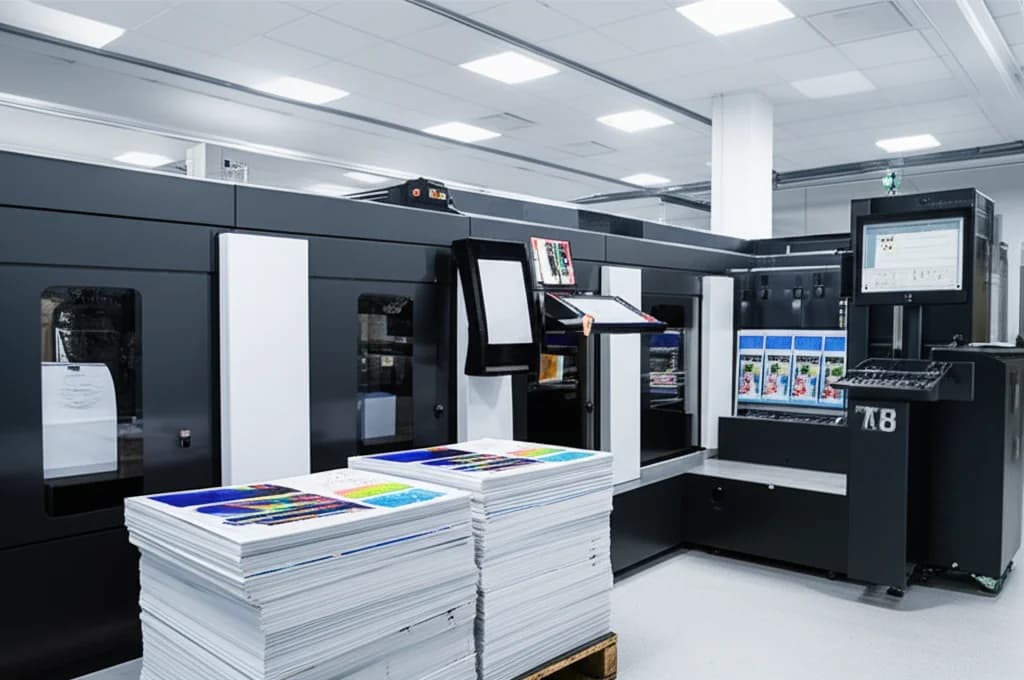
Five years ago, ordering 200 full-color brochures from a commercial printer meant paying a premium. Setup fees, plate costs, and minimum run requirements made short runs expensive — sometimes absurdly so. In 2026, that equation has flipped. Digital printing technology has advanced to the point where short runs are not just affordable — they're often the smartest choice.
The Bottom Line
In 2026, digital presses produce near-offset quality with zero setup fees, same-day turnaround, and per-unit costs that have dropped 30–40% over the past five years. For runs under 1,000 copies, digital is almost always the better deal. For many jobs under 500, it's the only deal that makes sense.
Here's what's changed, why it matters for your business, and how to take advantage of it.
What's Actually Changed in Digital Printing Technology
Digital printing isn't new — but the technology powering today's presses is dramatically different from even a few years ago. Here are the three biggest shifts driving costs down and quality up:
1. Faster Print Engines = Lower Per-Unit Costs
Modern production digital presses — like the HP Indigo 100K, Xerox Iridesse, and Canon imagePRESS V — print at speeds that were unthinkable for digital just five years ago. The HP Indigo 100K, for example, runs at 6,000 full-color sheets per hour in enhanced productivity mode.
Why does speed matter for cost? Because digital printing is priced largely on press time. A press that prints twice as fast effectively cuts the per-unit cost in half. This is why short-run pricing has dropped so significantly — the machines are simply more productive.
2. Toner and Ink Technology Has Leaped Forward
The old knock on digital printing was color quality: "It looks good, but it doesn't look offset good." That gap has shrunk to almost nothing. Key advances include:
- HP ElectroInk: Used in HP Indigo presses, this liquid electrophotographic ink produces a color gamut that matches or exceeds offset CMYK. It supports up to 7 colors (CMYKOGV) for an extended gamut that covers 97% of Pantone colors without custom ink mixing.
- High-density toners: Xerox and Canon have both introduced higher-density toner formulations that lay down richer, more saturated colors — eliminating the "washed out" look that plagued older digital presses.
- White and clear toner: Digital presses can now print opaque white and clear coatings inline, enabling effects that previously required separate offset or screen-printing passes.
3. Substrates: Digital Presses Now Handle Almost Any Paper
Early digital presses were picky about paper. Textured stocks jammed. Heavy cover boards wouldn't feed. Specialty papers were off-limits. In 2026, production digital presses handle:
- Paper weights from 60 lb text to 130 lb cover (and beyond on some models)
- Textured, linen, and felt stocks
- Synthetic substrates (Yupo, Teslin)
- Adhesive-backed papers and films
- Metallic and pearlescent stocks
This means digital printing is no longer limited to "standard" jobs. You can digitally print premium business cards on thick textured stock, brochures on coated gloss, or even labels on waterproof synthetic material — all without going to offset.
The Real Cost of Short-Run Printing in 2026
Let's put real numbers on the table. Here's what typical short-run digital printing costs in the Los Angeles area as of early 2026:
| Product | Quantity | 2021 Price | 2026 Price | Savings |
|---|---|---|---|---|
| Business cards (full-color, 16pt) | 250 | $45–$65 | $25–$40 | ~35% |
| Tri-fold brochures (100lb gloss) | 500 | $280–$400 | $160–$250 | ~40% |
| Postcards (4×6, double-sided) | 300 | $90–$140 | $55–$85 | ~38% |
| Saddle-stitched booklet (20 pages) | 100 | $350–$500 | $200–$320 | ~36% |
| Posters (12×18, 100lb cover) | 50 | $120–$180 | $70–$110 | ~40% |
Prices reflect typical Los Angeles market rates. Your exact pricing will depend on paper stock, finishing, and turnaround requirements. Get a custom quote for your specific project.
Key insight: The price drops aren't just from cheaper presses — they're from faster presses, cheaper consumables, and less waste. Digital printing in 2026 produces virtually zero waste sheets (no make-ready, no plate testing), which translates directly to lower costs for you.
Why Short Runs Make More Business Sense in 2026
Cheap short runs aren't just a nice-to-have. They fundamentally change how smart businesses approach print marketing:
1. Test Before You Commit
Want to try three different postcard designs for your next direct mail campaign? With digital, print 200 of each for roughly what 600 of one design would cost on offset. See which version drives the most response, then scale up the winner. This A/B testing approach was cost-prohibitive when every design required its own set of plates.
2. Print What You Need, When You Need It
The old model: order 5,000 brochures because the per-unit cost is so low, then store 4,500 of them in a closet for a year. When you finally use the last box, your phone number has changed and your product line has evolved. Sound familiar?
The 2026 model: order 300 brochures now. When they run out in two months, order 300 more — with updated content, new photos, or revised pricing. Just-in-time printing eliminates waste and keeps your materials current.
3. Personalize Everything
Digital printing's killer feature hasn't changed: variable data. Every piece can be different. Names, images, offers, QR codes — all customized per recipient. With 2026 presses running variable data at near-static speeds, personalized printing is now cost-competitive with generic runs.
This matters because personalized direct mail generates 135% higher response rates than generic mail (USPS research). When the cost premium for personalization drops to near-zero, there's no reason not to do it.
4. Respond to Opportunities Faster
A new client wants to meet Friday. You need leave-behind materials. With digital printing, your files can go to press at 9 AM and be ready for pickup by 3 PM. Try doing that with offset.
Speed isn't just convenient — it's a competitive advantage. The business that shows up with professional, custom-printed materials wins the deal over the one that shows up with a PDF on a tablet.
Digital vs. Offset in 2026: Where's the Line?
Digital printing has gotten dramatically better, but offset isn't going anywhere. Here's the honest breakdown of when each method makes sense in 2026:
| Scenario | Best Choice | Why |
|---|---|---|
| Under 500 copies | Digital | No setup costs, fast turnaround |
| 500–1,000 copies | Get quotes for both | Break-even zone — depends on specs |
| Over 1,000 copies | Offset | Per-unit cost drops dramatically |
| Exact Pantone match required | Offset | True spot colors only on offset |
| Variable data / personalization | Digital | Every piece can be unique |
| Same-day / next-day turnaround | Digital | No plates, no extended drying |
| Specialty paper (thick, textured) | Depends | Most stocks work on digital in 2026, but some extremes still need offset |
For a detailed cost-per-unit comparison with exact numbers, see our Offset vs Digital Printing Cost Breakdown.
What This Means for Small Businesses in Los Angeles
If you're a small business in LA or the San Gabriel Valley, the 2026 digital printing landscape gives you capabilities that were reserved for big companies with big budgets just a few years ago:
Restaurant owners: Print 100 seasonal menus every quarter instead of 500 once a year. Update prices and dishes without throwing away inventory.
Real estate agents: Print personalized property brochures for each listing, each with unique photos, specs, and QR codes — for under $2 each.
Event planners: Order 150 programs for Saturday's event on Wednesday. No minimum order penalties, no rush surcharges (at most shops).
E-commerce brands: Print branded insert cards, packaging inserts, and thank-you cards in runs of 200–500 and reorder as needed with updated messaging.
Nonprofits: Print 75 annual reports for your board meeting and 200 for donor distribution — two different runs, two different budgets, zero waste.
How to Get the Best Price on Short-Run Digital Printing
Digital printing is affordable, but you can still waste money if you're not strategic. Here's how to maximize value:
- ✓Submit print-ready files. Files that need corrections cost $25–$75 in prepress time. Send CMYK PDFs at 300 DPI with 0.125″ bleed and you'll skip revision charges entirely. See our print-ready files guide for details.
- ✓Use standard paper stocks. Your printer keeps certain stocks in inventory. Using an in-stock paper avoids special-order fees and delays. Ask what they run most often.
- ✓Batch similar jobs. Need business cards, postcards, and rack cards? Submit them together. Some shops offer a discount when multiple jobs run in the same session.
- ✓Choose standard sizes. Letter (8.5×11), half-letter (5.5×8.5), and standard postcard (4×6, 6×9) sizes run more efficiently on digital presses. Custom sizes may require extra trimming.
- ✓Skip rush fees. Standard turnaround (3–5 days) is usually 20–30% cheaper than same-day or next-day. Plan ahead when you can.
The Environmental Angle: Digital Printing Is Greener
Short-run digital printing has a real sustainability advantage over offset:
♻️ Digital Advantages
- Zero plate waste (no metal plates to discard)
- Near-zero setup waste (no make-ready sheets)
- Print only what you need (no overstock to recycle or landfill)
- Lower energy per unit on short runs
📊 The Numbers
- Offset wastes 5–15% of paper on make-ready
- Digital wastes under 1%
- Americans discard 4+ million tons of printed materials annually
- Print-on-demand and short runs reduce this by eliminating overproduction
If your business values sustainability — and your customers increasingly do — digital short-run printing aligns with reducing waste without sacrificing quality.
Looking Ahead: Where Digital Printing Goes Next
The trends driving digital printing costs down aren't slowing. Here's what's on the horizon:
- AI-powered prepress: Automated file checking, color correction, and imposition software are reducing prepress labor costs. Some shops already offer "upload and print" workflows with zero human intervention for standard jobs.
- High-speed inkjet production: Inkjet presses (like the Canon ProStream and HP PageWide) are pushing digital printing speeds into offset territory — 500+ feet per minute. As these presses become mainstream, the cost advantages of offset at volume will shrink further.
- Embellishment inline: Digital foil, spot UV, and raised texture are moving from separate post-press operations to inline capabilities. This means premium finishes at short-run quantities without separate setup costs.
- Sustainability-first consumables: Toner and ink manufacturers are shifting to bio-based and recyclable formulations. Expect "green digital printing" to become the default, not a premium option.
Ready to Print Smarter?
At First Global Graphics in Irwindale, CA, we run both offset and digital presses under one roof. We don't have a bias toward one method — we recommend whichever saves you money and gets you the best result. For most short-run jobs in 2026, that's digital.
Call us at (626) 960-4081 or request a quote online. Tell us what you need, how many, and when — and we'll give you an honest recommendation with exact pricing. No setup fees on digital. No surprises.
Frequently Asked Questions
Why is short-run digital printing cheaper in 2026 than it used to be?+
Three factors: faster press engines that print more sheets per hour (reducing per-unit labor cost), improved toner and ink technology that reduces consumable costs, and near-zero waste compared to offset's 5–15% make-ready waste. Combined, these advances have dropped short-run digital printing costs by 30–40% over the past five years.
How many copies count as a 'short run' in digital printing?+
In commercial printing, a short run typically means under 500 copies, though many print shops consider anything under 1,000 copies to be short-run territory. Digital printing is the most cost-effective method for these quantities because there are no plate or setup fees.
Is digital printing quality as good as offset in 2026?+
For most commercial applications — brochures, business cards, postcards, booklets — yes. Modern digital presses like the HP Indigo produce color that matches offset in nearly all situations. The remaining advantages of offset are exact Pantone spot color matching and slightly better consistency on very long runs (10,000+ copies).
How fast can I get a digital print job done?+
Same-day turnaround is common for standard digital print jobs. Many print shops, including First Global Graphics, can take your files in the morning and have finished pieces ready by end of day. Standard turnaround is 1–3 business days.
Can digital printing handle thick paper and specialty stocks?+
Yes. Modern production digital presses handle paper weights from 60 lb text to 130 lb cover, including textured, linen, metallic, and synthetic stocks. Some very thick or specialty substrates may still require offset, but the range of digital-compatible papers has expanded dramatically.
Is digital printing more environmentally friendly than offset?+
For short runs, yes. Digital printing produces zero plate waste, near-zero setup waste (no make-ready sheets), and allows you to print only the exact quantity needed — eliminating overstock that often ends up recycled or discarded. Offset is more energy-efficient per unit on very long runs, but for short runs, digital has a clear environmental advantage.
Ready to start your print project?
Get a free quote or call us at (626) 960-4081